Adapted from e-mail sent last night to Hereford Times newspaper:
“There is
so much one can say in a poem, perhaps to express joy about some aspect
of being out in nature or about something you have found funny or about
actually any subject you can think of.” (Letter, Oct. 29, 2020)
Financial
and career-ladder immobility lockdown for disadvantaged people has
existed long before Covid-19. An ‘Employment Rehabilitation Centre’
(ERC) Social Worker told my parents in 1978, “Yes, Alan [then aged 24]
has an academic brain, but he’s too slow to ever gain from further
government-funded education and training. It just wouldn’t be worth it.
He’ll just have to learn to lower his sights.”
While the system
never helped me get sustainable waged work and I was never properly
signposted to disability benefit entitlement until 2009 — despite six
weeks ‘vocational assessment period’ at ERC three decades earlier! — I
got more skilful through self-expression and self-directed learning
despite an unfair system, especially as “too many gaps in your
employment history” proved a barrier. Yet as I wrote a troubled 21 year
old poetic soul on Universal Credit recently, writing for
self-expression helps us ‘get a handle on things’ and while it might not
make us stars it helps makes us better survivors as we find our own meaning in what we are going through.
In some of my poems, I expressed a
deep rage rather than turning that rage inwards against myself with
disastrous mental health consequences. I realised in terms of the bigger
picture that I was not being punished for “a birth defect”(1) but
maltreated.(2)
Now,
“NHS Digital’s 2019-20 Mental Health Act statistics report ... states that there were 147.9 Mental Health Act detentions per 100,000 people in the most deprived tenth of areas, while the least deprived areas tenth recorded a rate of 42.8 detentions per 100,000. Data for other areas showed a clear link between deprivation and detention risk.”(3)
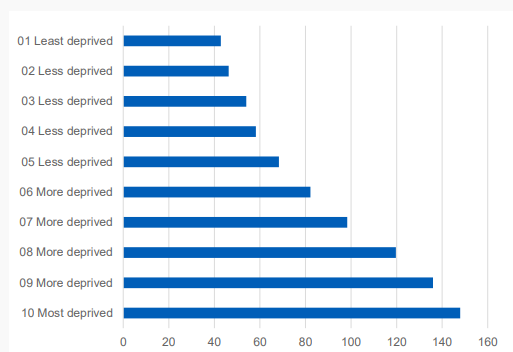
I applied skills and understanding to what I was facing. What do Hereford’s Tory MPs apply as elected public servants?
Alan Wheatley
Note
1. ERC Occupational Psychologist to me: “…. birth defect [sic]. There’s nothing more we can do to help you here. You [sic] will be terminated at the end of next week.”
2. Example poem:
They’re Robbing Themselves
Some laws are made behind our backs —
Such as subjecting dole money to income tax.
Do cushioned bureaucrats in Whitehall
Have any love for me at all?
Here am I: long unemployed
‘Twixt them and me an awful void:
On their work they seem to thrive
While the poor are struggling to survive.
What must it take for them to see
That they’re robbing themselves
Of their humanity?
Yet while they make it ever harder
I must pray for them with greater ardour.
Alan the Poet Therapeutic
(c) 1982 by Alan Raymond Wheatley
Mental Health Act detentions three times higher in most than least deprived areas, as race gap widens
Social work leader calls for action to tackle root causes of mental health crisis as annual statistics show clear link between deprivation and risk of detention

